Know how every rival frames the market, and when that changes.
Who each competitor sells to, what they promise, and how their story shifts over time, taken from their own pages.
Who each rival sells to, side by side
Pick any two companies, including your own.
- Buyer segments, backed by evidence
- What each promises buyers, marked as the vendor’s own claim
- In the dashboard you can also search segments and promised outcomes
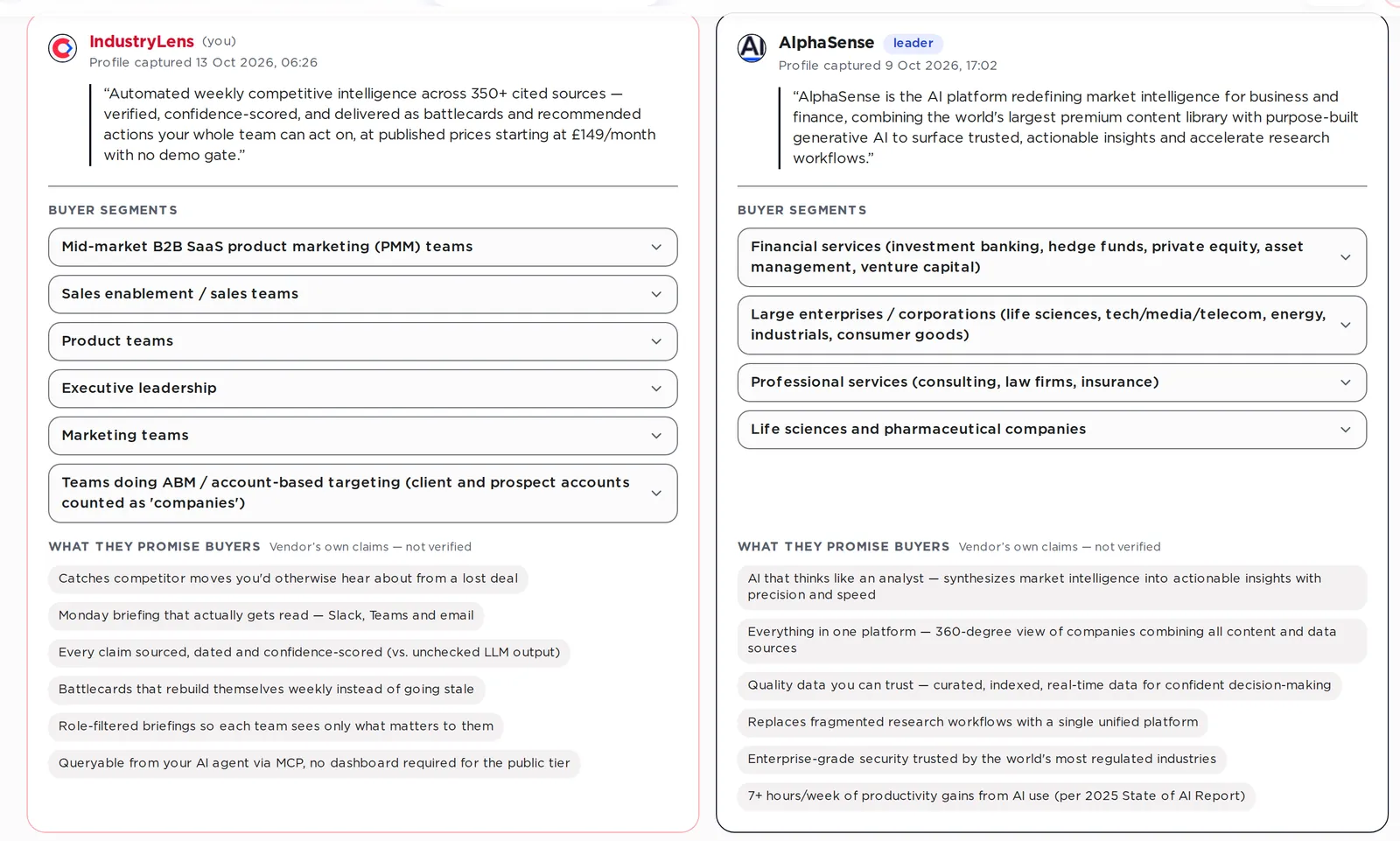
What we track for each competitor
When a competitor changes its story, the change feeds straight into your battlecards, so reps hear the new framing first.
What the positioning checks stopped.
Real framing claims that never reached a briefing, and why. Vendors stay unnamed so we never repeat a story we had to retract.
“A vendor rebuilt its homepage around a new AI message.”
It was the first capture of that page. With no earlier version, no rebuild was shown.
“A vendor rebranded under a new name and domain.”
The news predated the tracking window and was about its parent company, not the vendor itself.
“A vendor touts a steep drop in support tickets.”
The same figures were already reported, word for word, in an earlier insight.
Every draft runs through 29 checks. See them all.
Questions about positioning tracking.
Where does the positioning come from?
From what each competitor publishes: homepage, product and pricing pages, comparison pages and announcements, each shown with the page it came from.
How do I find out when a competitor repositions?
Positioning changes are detected on the weekly scan and appear in your feed and weekly briefing.